In modern enterprise commerce, large conglomerates routinely enjoy 20% to 40% lower unit costs than small and medium-sized enterprises (SMEs) simply because of sheer purchasing scale. When an enterprise orders millions in packaging, freight, or software licenses, suppliers compete aggressively with steep discounts and white-glove service level agreements (SLAs). For growing companies, matching this scale alone is impossible. This structural market imbalance is precisely where a strategic co-buyer transforms the competitive landscape.
A co-buyer (or co-buying partner) in business procurement is an independent purchasing specialist or alliance partner that consolidates the purchasing demand of multiple non-competing organizations. By aggregating collective spend, a co-buyer negotiates enterprise-grade pricing, volume rebates, and preferred commercial terms from tier-1 suppliers that mid-market businesses cannot secure independently. Unlike traditional intermediaries, a true co-buyer provides hands-on procurement support, acting as an active co-purchaser that aligns directly with your bottom line.
Table of Contents
What is a Co-Buyer in Business Procurement?
To understand the role of a co-buyer, one must look at how purchasing power operates in B2B markets. Suppliers categorize buyers into pricing tiers based on historical volume and projected annual spend. Smaller buyers are relegated to list pricing or standard tier-3 discount matrices. They face rigid payment terms, minimal supplier flexibility, and sluggish customer service.
When you collaborate with a dedicated co-buyer partner, your business joins an aggregated purchasing ecosystem. The co-buyer combines your order volume with the procurement demands of dozens of similar mid-market enterprises. To the supplier, this aggregated volume represents enterprise-level account revenue, unlocking tier-1 contract pricing, priority manufacturing slots, and bespoke delivery terms.
According to research from the Chartered Institute of Procurement & Supply (CIPS), collective sourcing and demand aggregation models systematically lower unit costs by 15% to 30% while reducing supply chain vulnerability across volatile industrial sectors.
The Scale Dilemma: Why SMEs Overpay on Vendor Contracts
Most mid-sized businesses suffer from decentralized, reactive buying. Department leaders purchase software, office equipment, maintenance services, and raw materials in silos. This dynamic creates three major cost drivers:
- Lack of Sourcing Leverage: Purchasing 50 software seats or 5 metric tons of packaging yields zero bargaining power against global vendors.
- Resource Constraints: Mid-market firms rarely maintain dedicated category managers for every spend category, leading to unscrutinized vendor renewals and unchecked price creep.
- Hidden Maverick Spend: Without strict shared procurement services, employees purchase off-contract items at exorbitant spot rates.
A strategic co-buyer solves this fundamental structural deficit by injecting immediate buying leverage, disciplined contract governance, and category intelligence into your operations.
How B2B Co-Buying Works: The 4-Stage Operational Model
How does a collaborative co-buying partnership function on a day-to-day operational level? At ZOPA, the co-buyer framework follows four structured phases designed to preserve your organizational autonomy while maximizing shared leverage:
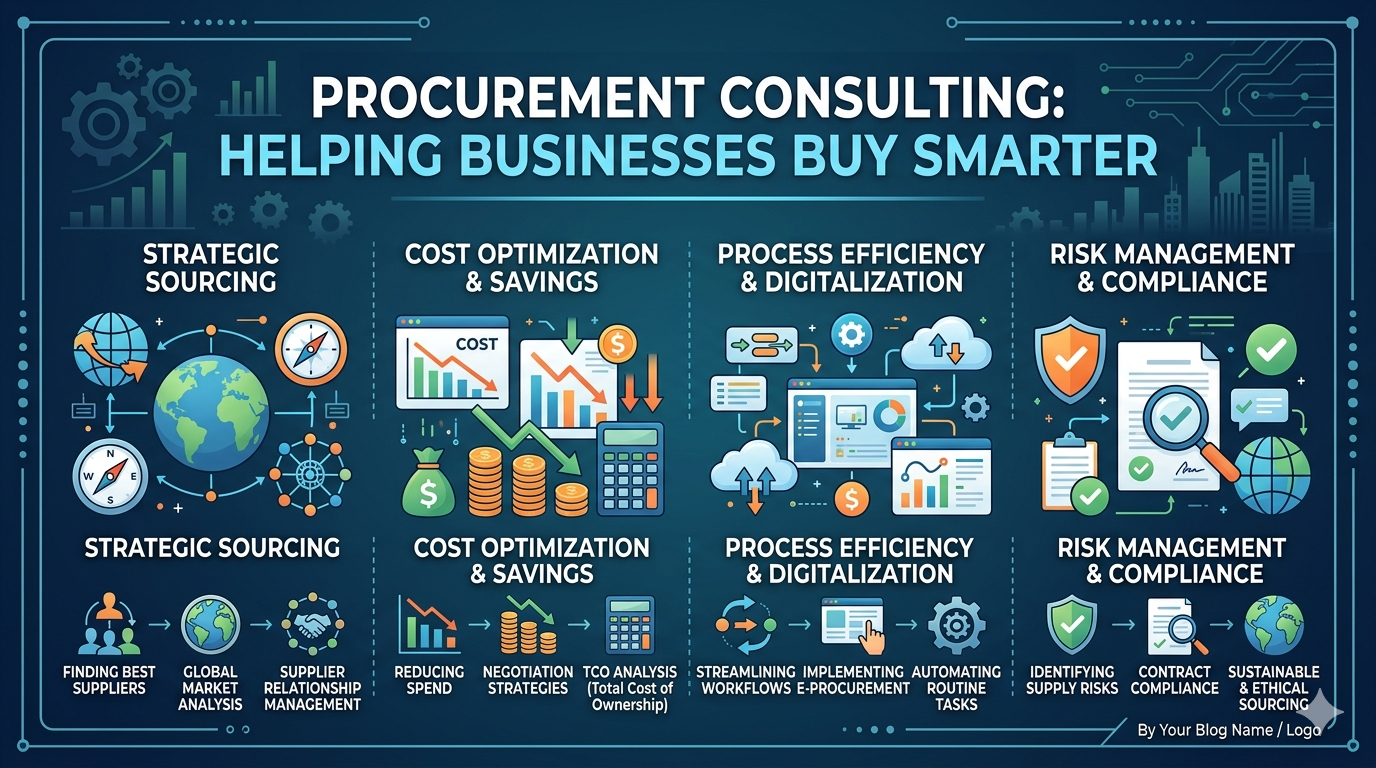
- Spend Discovery & Categorization: The co-buyer conducts a comprehensive spend diagnostic, identifying overlapping indirect and direct spend categories (e.g., freight, packaging, SaaS, industrial supplies) where volume aggregation delivers the highest immediate margin relief.
- Demand Pooling & Specification Harmonization: The co-buyer harmonizes specifications across participating partner companies. By standardizing core product requirements without compromising custom quality requirements, buying volume is magnified.
- Competitive Aggregated RFPs: The co-buyer brings millions in aggregated buying power to market, running high-leverage Requests for Proposal (RFPs). Suppliers submit aggressive enterprise bids knowing they are competing for a high-volume portfolio of accounts.
- Master Contract Execution & Local Governance: Master service agreements (MSAs) are established with pre-negotiated tier-1 rate cards. Each individual participating business retains direct operational billing or streamlined invoicing while capturing the negotiated savings on every purchase order.
As highlighted by Harvard Business Review, collaborative purchasing networks allow mid-sized enterprises to capture the economies of scale typically reserved for Fortune 500 corporations without relinquishing operational control.
Co-Buyer vs. Traditional GPO vs. Procurement Consultant
Many business leaders wonder how a dedicated co-buyer differs from a legacy Group Purchasing Organization (GPO) or an external management consultant. The distinction lies in transparency, hands-on execution, and ongoing operational support.
| Evaluation Dimension | Dedicated Co-Buyer (ZOPA) | Legacy GPO | Procurement Consultant |
|---|---|---|---|
| Business Model | Active co-purchasing partner aligned with client savings | Pre-set catalog contracts; vendor-funded administration fees | Hourly or project-based fee for audit slide decks |
| Fee Transparency | 100% transparent rate cards and verifiable cost takeout | Opaque supplier kickbacks and vendor rebate withholdings | High upfront advisory retainers regardless of execution |
| Hands-On Execution | Full execution: vendor vetting, negotiation, and ongoing orders | Self-service portal access; minimal direct negotiation | Recommendations only; client internal team must execute |
| Customization | Tailored sourcing aligned with specific operational needs | Rigid standardized SKUs and fixed vendor lists | Highly customized strategy but zero buying power |
| Digital Sourcing Integration | Integrated procurement systems via ZOPA Flux | Static supplier catalog websites | Spreadsheets and manual audit documentation |
5 Core Spend Categories Primed for Co-Buying Savings
Where does a co-buyer make the fastest financial impact? While specialized proprietary engineering components remain company-specific, five major indirect and operational spend categories yield instant double-digit returns under a co-buying model:
- Cloud Infrastructure & SaaS Subscriptions: Software vendors maintain substantial margins. Consolidating enterprise software seats and cloud consumption through a co-buyer delivers 18% to 35% savings across CRM, ERP, productivity, and cybersecurity tools.
- Logistics, Freight & Warehousing: Less-Than-Truckload (LTL) and ocean freight rates fluctuate wildly. Aggregating pallet volume across co-buying partners grants access to contract-level container pricing and dedicated freight capacity.
- Industrial Packaging & Corrugated Boxes: High-volume packaging converters demand massive minimum order quantities (MOQs) for competitive rates. A co-buyer unifies cardboard, shrink wrap, and pallet orders across manufacturing partners.
- Maintenance, Repair & Operations (MRO): Facilities, safety equipment, electrical spares, and tooling are notorious for unchecked tail-spend leakage. Centralized co-buying rate cards eliminate distributor markups.
- Corporate Professional Services: Legal, compliance, security, and facility staffing benefit immensely from pre-negotiated master rate agreements managed by professional vendor sourcing and management teams.
7 Strategic Benefits of Engaging a Co-Buyer Partner in 2026
Working alongside an expert co-buyer provides multifaceted advantages extending far beyond surface-level unit discounts:
1. Immediate Double-Digit Cost Reduction
By stepping into established aggregated contracts, businesses experience instant 15% to 30% price reductions from day one without lengthy trial-and-error.
2. Enterprise-Grade Service Level Agreements (SLAs)
When an individual SME encounters delivery delays or defective products, large vendors frequently respond with low urgency. When a co-buyer represents the account, suppliers protect the relationship vigorously, guaranteeing rapid response times and dedicated account managers.
3. Elimination of Maverick and Tail Spend
Uncontrolled ad-hoc purchasing drains up to 12% of total corporate expenditure. A co-buyer implements structured ordering workflows that direct spend toward pre-negotiated channels.
4. Access to Tier-1 Suppliers
Global leading suppliers frequently refuse to bid on contracts below seven-figure spend thresholds. Co-buying breaks down these barriers, giving mid-sized businesses direct access to world-class manufacturing and service partners.
5. Seamless Procurement as a Service (PaaS)
Instead of hiring expensive in-house procurement directors, contract attorneys, and category specialists, your company gains access to end-to-end procurement as a service on demand.
6. Enhanced Supply Chain Resilience & Risk Mitigation
Co-buyers continuously vet supplier financial health, regulatory compliance, and contingency capacity, shielding your operations from unexpected vendor bankruptcies or stockouts.
7. Complete Commercial Autonomy
Unlike corporate mergers or rigid purchasing consortiums, partnering with a co-buyer requires zero equity dilution, zero organizational restructuring, and complete freedom to opt into the spend categories that benefit your balance sheet.
Industry analysts at Gartner emphasize that agile procurement ecosystems leveraging external shared services outperform peers by 40% in operating margin resilience during inflationary market cycles.
4-Step Onboarding Roadmap: How to Partner with ZOPA
Transitioning to an aggregated co-buying model with ZOPA is fast, low-risk, and requires zero disruption to your daily operations:
- Step 1: Complimentary Spend Audit: Share your historical vendor invoices and accounts payable data under a strict mutual NDA. ZOPA’s analytics engine identifies immediate savings opportunities across your spend categories.
- Step 2: Opportunity & Savings Benchmark: We present a transparent line-by-line comparison illustrating exact price differences between your current vendor contracts and ZOPA’s aggregated co-buyer rates.
- Step 3: Supplier Alignment & Account Transition: We handle the entire vendor transition process, establishing your accounts under master agreements or negotiating discounts directly with your incumbent suppliers.
- Step 4: Continuous Optimization & Digital Governance: Track your verified monthly savings and manage approvals effortlessly through ZOPA Flux, backed by dedicated procurement support specialists.
Frequently Asked Questions About Co-Buying
What is a co-buyer in business procurement?
A co-buyer is an external procurement partner that aggregates the purchasing volume of multiple non-competing businesses to negotiate enterprise-level pricing, lower minimum order quantities, and preferred contract terms with suppliers.
How does co-buying differ from a traditional GPO?
Traditional GPOs primarily offer static catalogs funded by vendor commissions, offering minimal custom sourcing. A dedicated co-buyer like ZOPA delivers customized procurement support, transparent savings without hidden vendor kickbacks, and end-to-end operational execution.
Does my business have to change existing suppliers to use a co-buyer?
Not necessarily. In many cases, a co-buyer can negotiate substantial rate reductions directly with your incumbent vendors by leveraging broader industry benchmarks and collective purchasing power.
What size companies benefit most from a co-buyer?
Small to mid-market companies with annual revenues between $5 million and $150 million see the greatest impact, as they face the largest pricing disparity when buying against massive enterprise corporations.
Conclusion: Accelerating Growth with ZOPA Co-Buying Power
In an increasingly competitive global economy, mid-market businesses cannot afford to pay an arbitrary “small business penalty” on essential vendor contracts. By uniting with an agile co-buyer partner, you unlock the purchasing power of an enterprise giant while maintaining the agility of an independent company.
Are you ready to stop overpaying on direct and indirect spend? Contact ZOPA today for a complimentary spend analysis and discover how our strategic co-buying partnerships can deliver immediate 15% to 30% cost reductions for your business.